

The Battle for the Wounded on Neretva River, known in Yugoslav historiography as the Fourth Enemy Offensive, began on January 20, 1943. The operation, codenamed Fall Weiss, was a strategic plan to finally defeat the Communist Party - led by People's Liberation Movement of Yugoslavia with a joint attack by the Axis Powers. The operation began with a concentric attack on partisan-controlled territory in western Bosnia and parts of Croatia. The partisans began to retreat to the southeast of the country, having previously evacuated almost 4.000 wounded.
"Due to the fact that the focus throughout the entire operation was on saving the wounded and injured, this operation is also called the most humane battle of World War II."
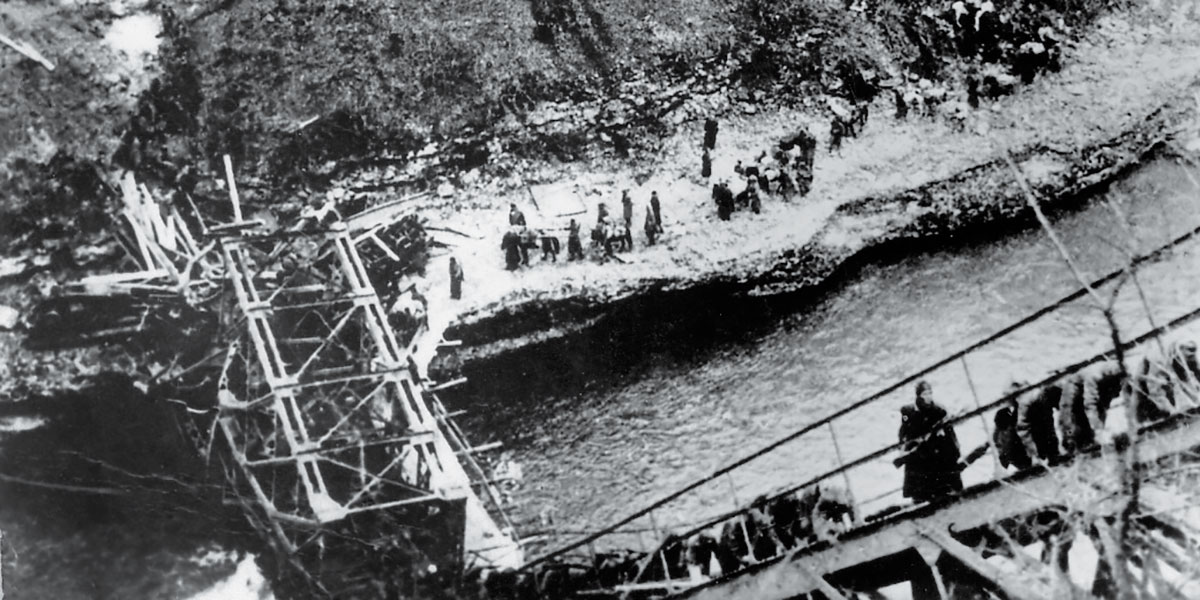
Partisans, the wounded, and thousands of refugees retreated across the Bosnian hills and mountains in harsh winter conditions. Having managed to break through the enemy encirclement, they reached the Neretva River in Jablanica.
Applying a strategic maneuver in order to deceive the enemy, they demolished the railway bridge over the Neretva. By defeating the Chetniks on the other side, and pushing back the Germans in the north, they managed to gain time. After that, on the site of the demolished bridge, they built a wooden structure over which the majority of the forces were transferred together with the wounded and the refugees. The monthslong battle ended with a clear victory for the partisans, who saved most of their forces and saved the wounded.