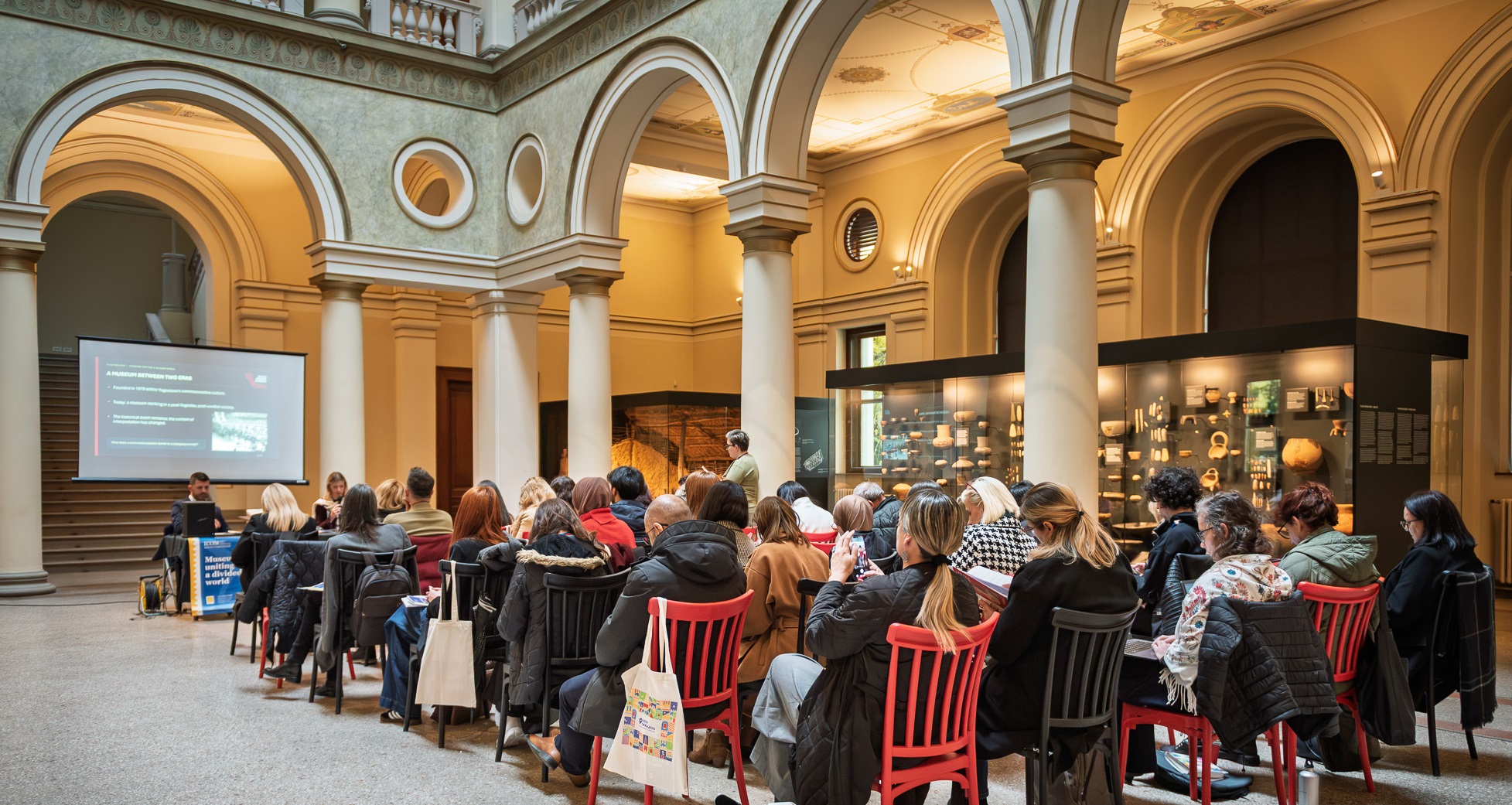
The ICOM SEE Annual Conference, entitled “Museums Uniting a Divided World,” took place in Sarajevo on 3 and 4 November 2026. Hosted by the National Museum of Bosnia and Herzegovina, the conference was organised by ICOM SEE in cooperation with ICOM Bosnia and Herzegovina and the National Museum.
The two-day programme featured a keynote lecture and 18 papers presented across four thematic sessions exploring memory and ethical interpretation of the past; community participation, inclusion and learning; cultural heritage and urban identity; and connections between museum collections, audiences and institutions.
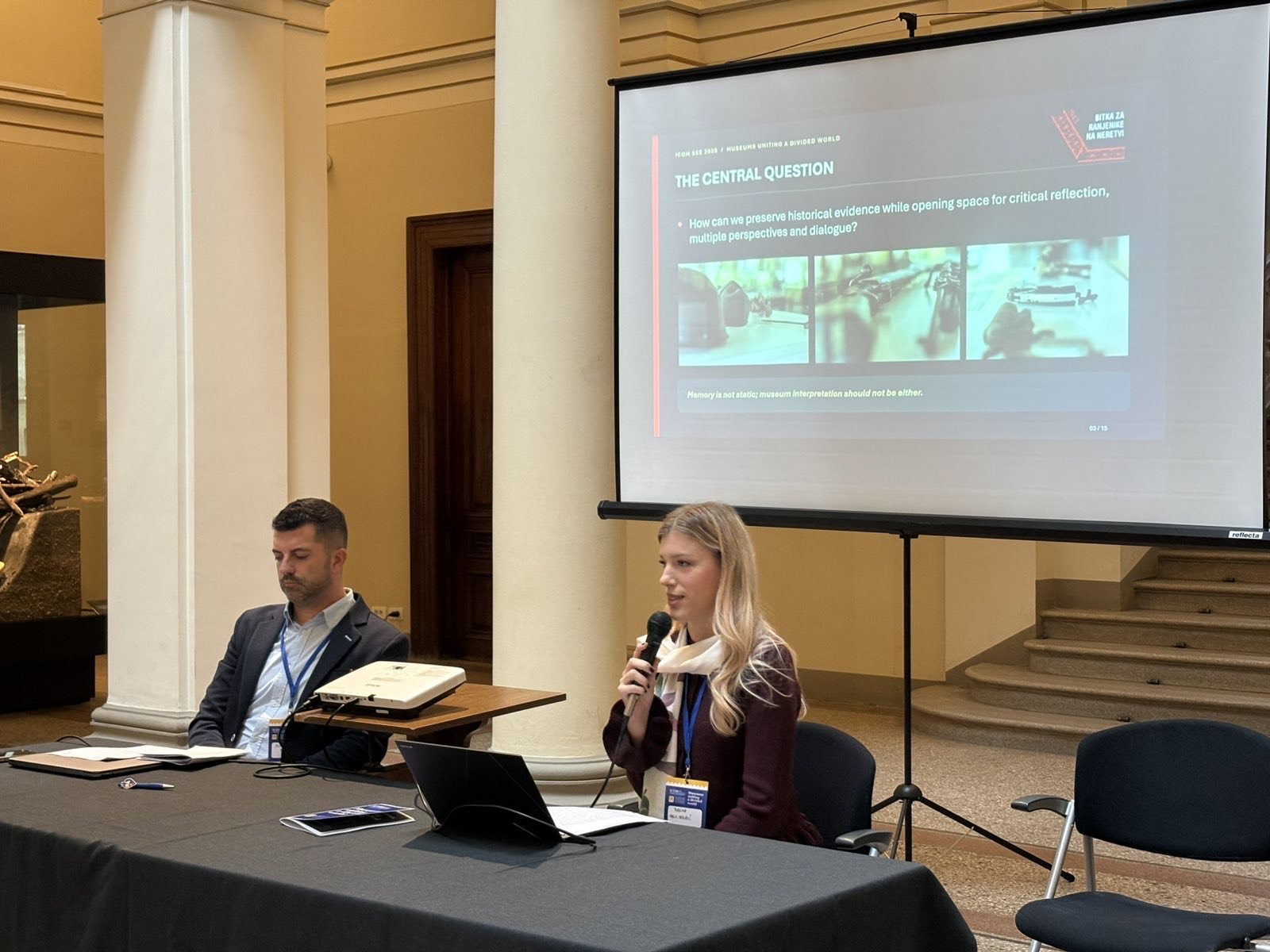
Belma Halilhodžić, Director of the Public Institution Museum “Battle for the Wounded on the Neretva” in Jablanica, also contributed to the conference with a presentation entitled “Beyond the Battle.” Her presentation explored the role of museums in post-conflict societies, with particular emphasis on the importance of remembrance, critical engagement with the past and peacebuilding.
Drawing on the example of the Museum “Battle for the Wounded on the Neretva,” she highlighted the importance of contemporary museum approaches that move beyond traditional narratives of wartime events, shifting the focus towards universal human values, solidarity, humanity and mutual understanding. Particular attention was given to the educational role of museums and their potential to foster a culture of peace through dialogue and active visitor engagement, especially among younger generations.
The gathering provided a valuable opportunity to strengthen professional connections, explore new possibilities for collaboration and reflect on the role of museums as spaces for dialogue, mutual understanding and connections across borders.
Museum “Battle for the Wounded on the Neretva” in Jablanica Participates in the Final Seminar Cycle of “Bringing History to Life?” in Bosnia and Herzegovina
The Museum “Battle for the Wounded on the Neretva” in Jablanica participated in the final cycle of the international seminar “Bringing History to Life? Personal Stories in History Education in Europe,” held in Bosnia and Herzegovina as part of the Memory Lab platform.
This international project and educational concept is funded by the Franco-German Youth Office and focuses on exploring and developing innovative approaches to history education and teaching. Particular emphasis is placed on finding ways to make the past more engaging, tangible, and relevant to younger generations.
The project is being implemented in cooperation with the following partner organisations: Max Mannheimer Studienzentrum, History Museum of Bosnia and Herzegovina, Archives d’Alsace, and the Croatian History Teachers Association.
The main objective of the project is to bring together experiences in working with living witnesses of historical events and experiences in working with material objects and artefacts from the past, with the aim of jointly developing new and creative approaches to history education. In this way, the project seeks to help young people gain a more direct understanding of historical events and processes while highlighting their significance for contemporary society.
Throughout the seminar, important questions were raised concerning the opportunities and advantages, as well as the challenges and limitations, of working with witnesses of historical events. Discussions explored how experiences of the past can be conveyed when no living witnesses remain, how personal stories can be connected with historical artefacts, and how museum objects can become active, interactive, and accessible tools for communicating with young people and engaging them in learning.
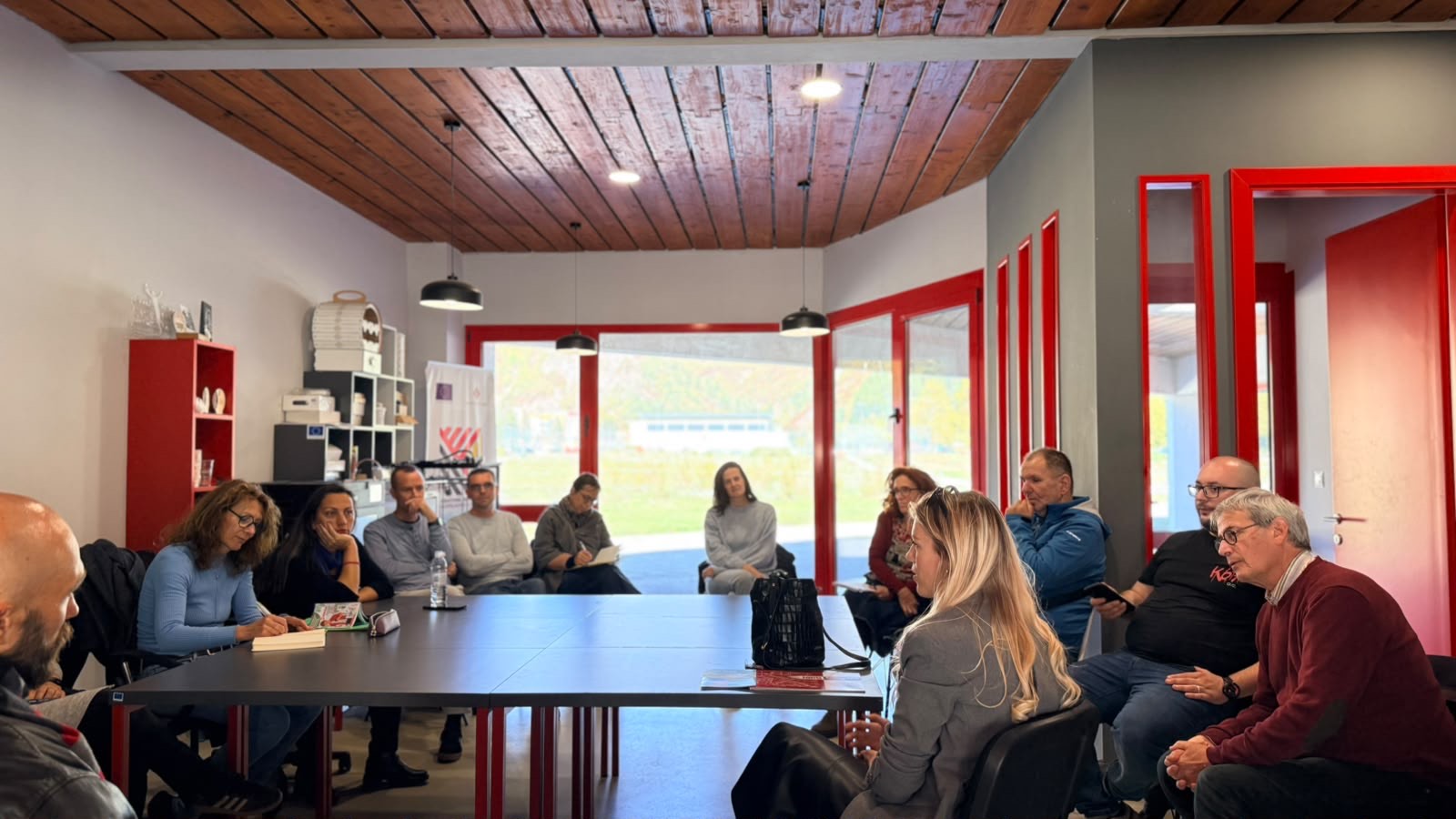
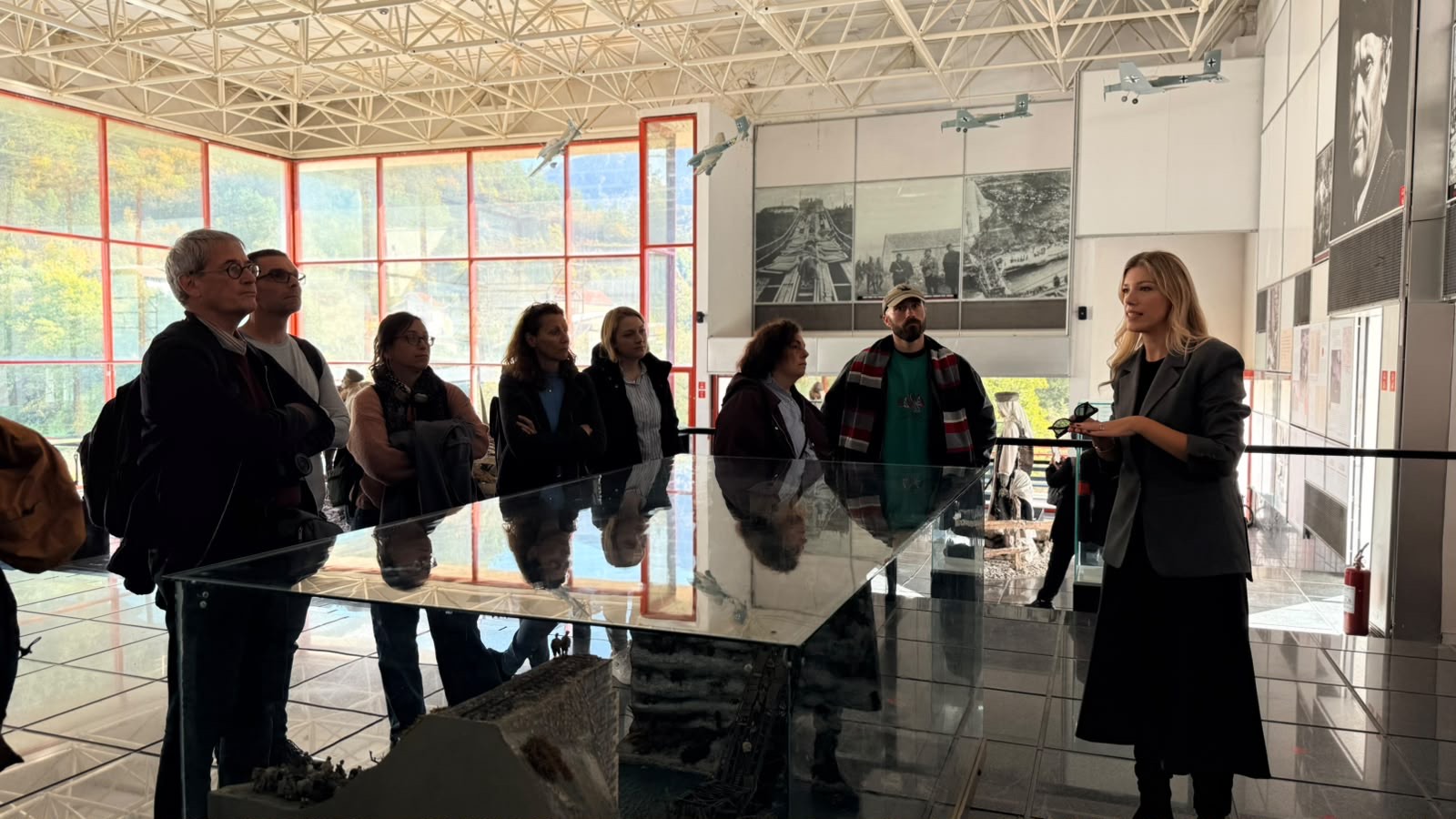
The seminar programme began with a visit to the Historical Museum of Bosnia and Herzegovina, accompanied by expert lectures and discussions. It continued with visits to the Srebrenica Memorial Centre, the Sarajevo Spomenar, and the Memorial Complex “Battle for the Wounded on the Neretva” in Jablanica. Through lectures, the exchange of experiences, and meetings with experts involved in interpreting and bringing history closer to the public in various ways, participants had the opportunity to explore different methods and approaches that contribute to contemporary history education.
The participation of the Museum “Battle for the Wounded on the Neretva” in this project provides an opportunity to exchange knowledge and experience, as well as to explore new ways of presenting historical heritage. By connecting personal testimonies, museum objects, and contemporary educational methods, museums can further improve their work with young people and contribute to preserving the culture of remembrance.
With the conclusion of this seminar cycle in Bosnia and Herzegovina, the partner organisations continue their joint efforts to bring history closer to new generations — not merely as a collection of facts about the past, but also as a means of understanding human experiences, developing critical thinking, and fostering dialogue about the past and its significance for the present.
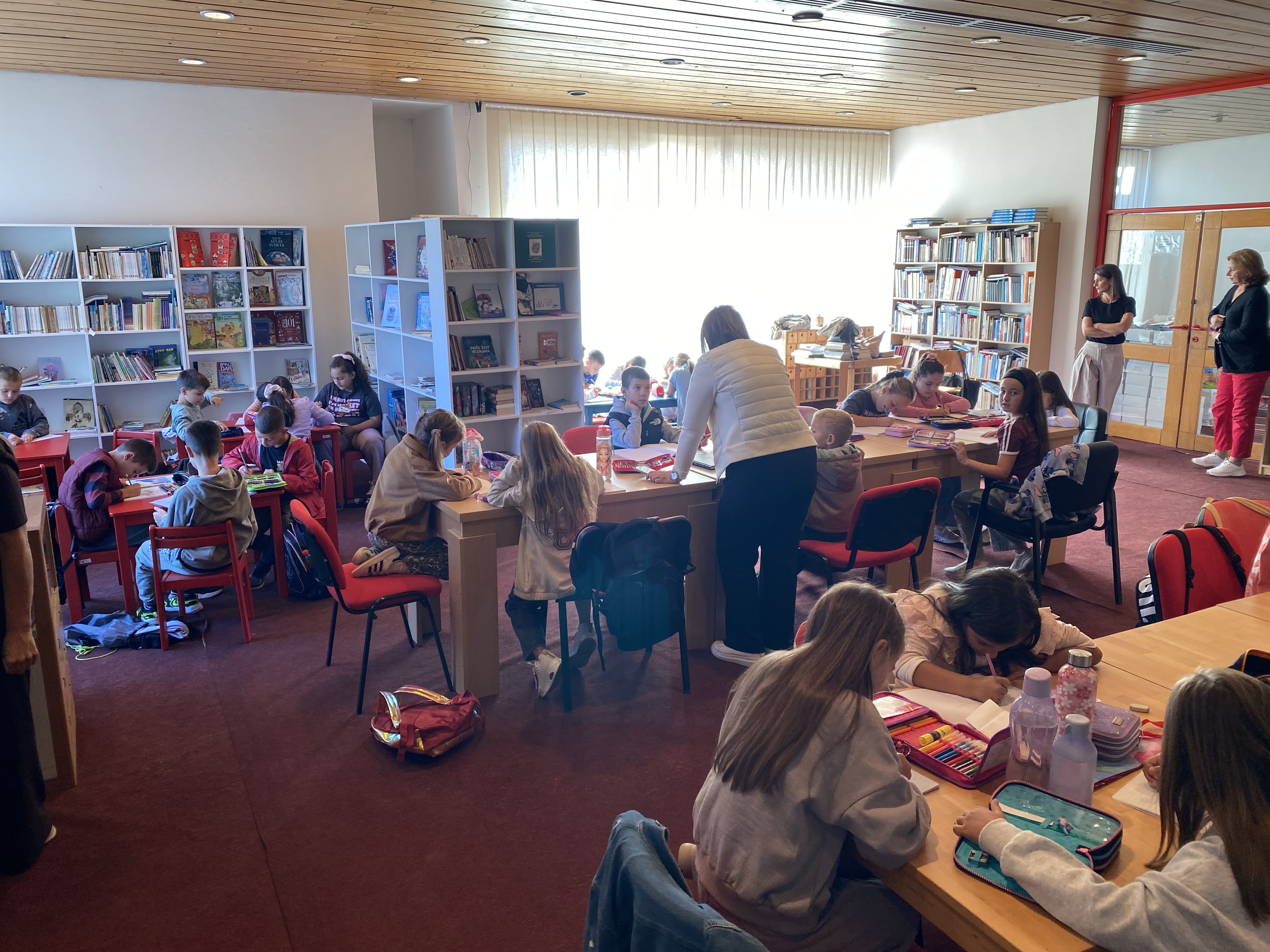
As part of the “In the World of Books” workshop, third-grade students had the opportunity to explore the library, learn about its role, and discover how to find and use different types of books. Through conversation and hands-on examples, they learned about the key differences between fairy tales, fables, and encyclopedias, exploring what makes each type of book unique.
Reading was an important part of the workshop. The students took turns reading selected passages and then shared their thoughts about the characters, stories, and messages they encountered.
The workshop also included a creative activity in which the children wrote about and illustrated their favourite book character, using drawings and a few sentences to explain why they had chosen that particular character.
By combining conversation, reading, writing, play, and creative expression, the workshop helped foster curiosity, a love of books and reading, creativity, and confidence in expressing ideas.
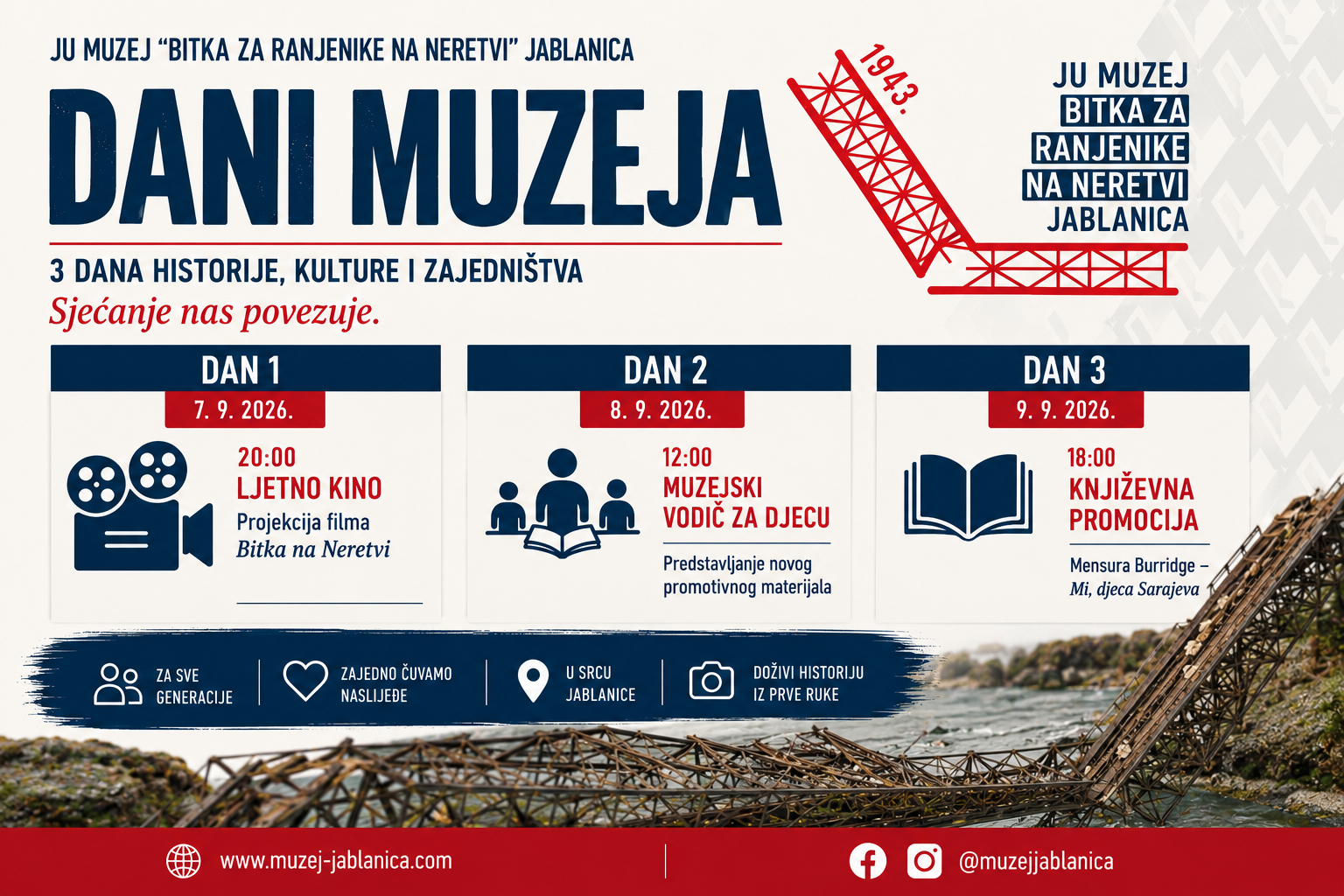
From 7 to 9 September 2026, the Public Institution Museum “Battle for the Wounded on the Neretva” Jablanica organized Museum Days, a three-day programme dedicated to history, culture, literature, and museum activities for children.
Held under the slogan “Memory Connects Us,” the event brought together visitors of different generations. Through film, the presentation of a new museum guide for children, and a literary event, Museum Days demonstrated that a museum is not only a place where the past is preserved, but also a space for encounters, learning, dialogue, and the creation of new experiences.
The programme began on 7 September. The first day featured an open-air cinema and a screening of the legendary film Battle of Neretva, one of the best-known cinematic works depicting the events of 1943.
The second day, 8 September, was dedicated to the Museum’s youngest visitors and the presentation of the new Museum Guide for Children - Jablanko. This educational and promotional publication was designed to help children discover the Museum and the history it preserves through age-appropriate content, activities, and exploration.
Museum Days concluded on 9 September with the presentation of Mensura Burridge’s book We, the Children of Sarajevo, opening up space for literature, personal memories, and dialogue about experiences of the past.
Through Museum Days, our aim was to bring the Museum closer to the local community and visitors of all generations, while showing that cultural heritage truly comes to life when we explore, interpret, and pass it on together.
Three days of history, culture, and togetherness once again reminded us of the message at the heart of the entire event: Memory connects us.
In Jablanica, the 83rd anniversary of the Battle for the Wounded on the Neretva was commemorated—one of the most significant historical events symbolizing humanity and solidarity.
In Mostar, on 21 April 2026, the director of the Public Institution Museum “Battle for the Wounded on the Neretva” Jablanica, together with the Ministry of Trade, Tourism and Environmental Protection of the Herzegovina-Neretva Canton, signed a Framework Cooperation Agreement aimed at improving cooperation between schools and institutions that manage, protect, or represent the cultural, historical, and natural heritage of the Herzegovina-Neretva Canton.
On the occasion of World Book and Copyright Day, a workshop was held in the museum library (which operates as the only public library in the Municipality of Jablanica) for first-grade pupils of Primary School “Suljo Čilić” Jablanica.