

In addition to the main “Battle of the Neretva” exhibition, museum visitors can explore five additional exhibitions. Each exhibition is bilingual (Bosnian and English), and most are accompanied by audio guides available in five languages (Bosnian, English, German, Arabic, and Turkish).
1) Main Exhibition: Battle of the Neretva
Content: Chronologically presented photographs and texts on panels, a model of the demolished bridge, models of German aircraft, original items such as uniforms, weapons, helmets, caps, models of columns with wounded, flags, maps, medals, documents, and multimedia content displayed on televisions and tablets.
2) Exhibition: Archaeology of Resistance
Content: More than 200 authentic items discovered with metal detectors at the Neretva battlefield site, including weapons, coins, food containers and utensils, remains of personal belongings and insignia, helmets, and Partisan caps.
3) Traveling Exhibition: A Humane Story of a Humane Battle – Five Decades of the Film “Battle of Neretva”
Content: 16 roll-up panels featuring a large reprint of a poster by Pablo Picasso, excerpts from the film Cinema Komunisto (a documentary about the making of the film “Battle of the Neretva”), and clips from the original movie.
4) Temporary Exhibition: Retrospective – 70 Years of the Municipality of Jablanica
Content: Eight panels presenting the chronological development of Jablanica, from antiquity to the modern era, along with a short documentary on the construction of the hydroelectric power plant and the creation of Jablanica Lake.
5) Exhibition: The Wounded at Krstac
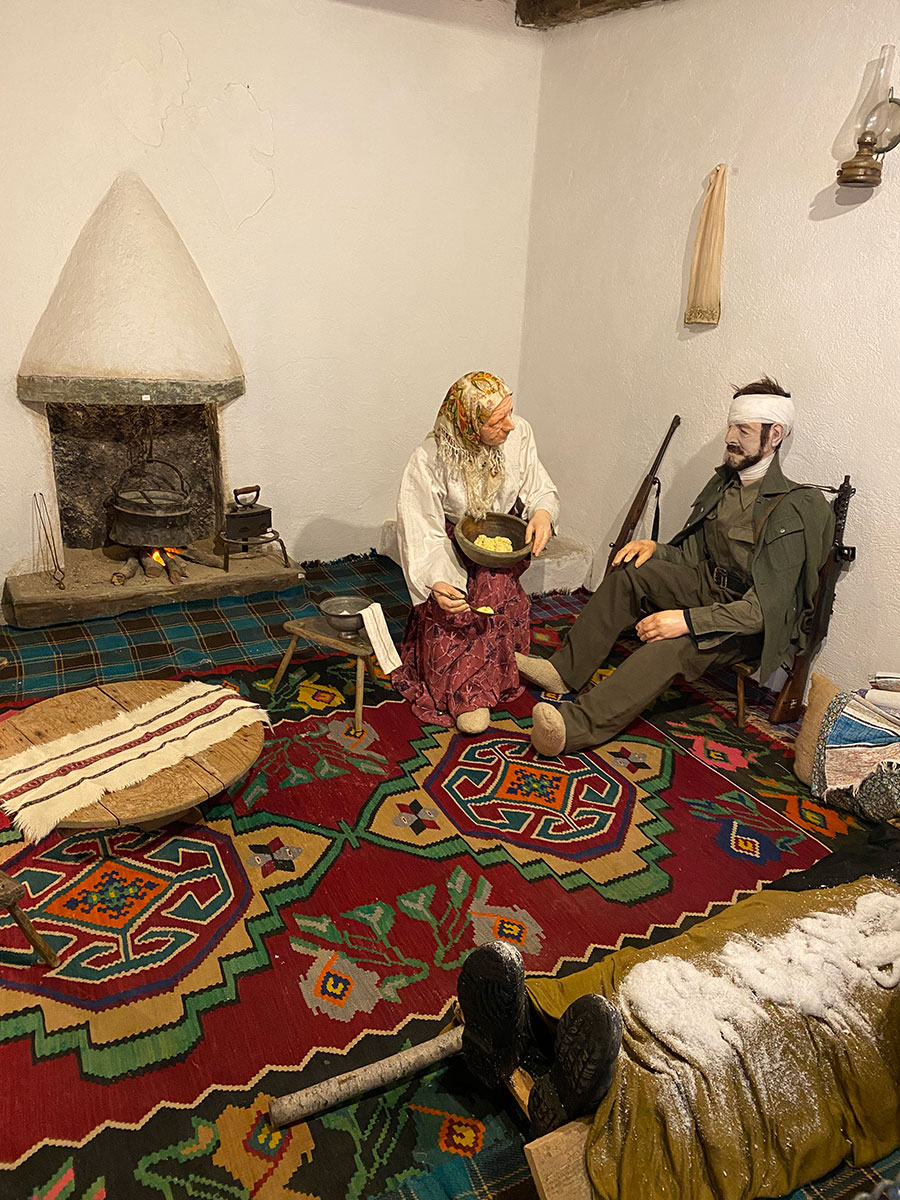
Content: Ten panels featuring 13 photographs and artworks from the period of the Battle of the Neretva, along with 12 participant testimonies; a stone house installation depicting a local woman caring for a wounded Partisan; and a tablet presentation describing the interior and exterior of a traditional Herzegovinian stone house.
6) Exhibition: War and Art
Content: 18 panels covering the poem The Pit by Ivan Goran Kovačić, created during World War II; films inspired by major offensives; four models of conceptual designs for the Makljen monument and the Neretva memorial complex; a model of Makljen; commemorative coins (Neretva and Sutjeska); bronze sculptures (Tito in a Coat and Part of a Column); artworks (Carrying the Wounded and Prozor); and the documentary Celebration in Jablanica, marking the opening of the memorial complex in 1978.